John Marley (October 17, 1907 – May 22, 1984) was a master of the “craggy” character turn, a performer whose weathered features and soulful intensity didn’t find their full bloom of stardom until he reached middle age. Born Mortimer Leon Marlieb in Harlem to Russian-Jewish immigrant parents, Marley was a product of the tough New York streets. After dropping out of the City College of New York to pursue acting—partly to escape the “gangland troubles” of his youth—his career was temporarily paused by World War II, during which he served in the United States Army Signal Corps.
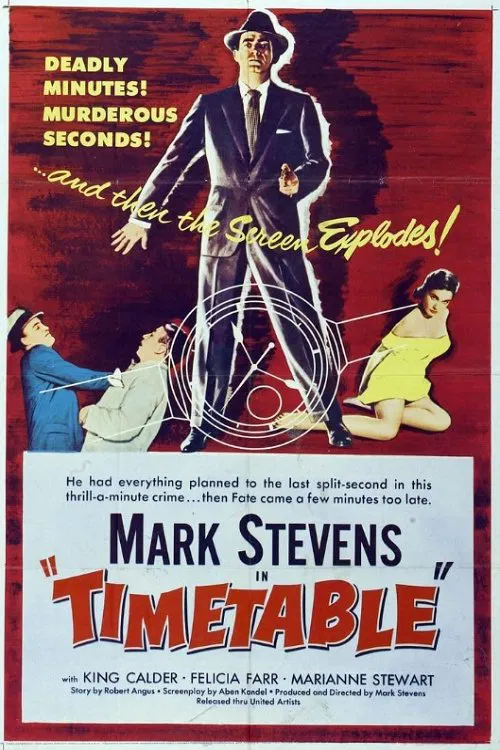
Following the war, Marley became a ubiquitous presence in the Hollywood studio system, often appearing in uncredited or minor “unsympathetic” roles. In 1956, he appeared in the film noir Timetable, directed by and starring Mark Stevens. This project linked him to a remarkable ensemble of character actors, including Jack Klugman, Wesley Addy, and Felicia Farr. While he spent much of the 1950s and early 60s as a “nameless face” in dozens of television series like The Twilight Zone and The Untouchables, his career underwent a seismic shift when he became a key collaborator of independent cinema pioneer John Cassavetes.
Marley achieved a rare level of critical acclaim for his performance in Cassavetes’ breakthrough feature Faces (1968). Playing the role of Richard Forst, a man grappling with the disintegration of his marriage, Marley’s raw and vulnerable performance won him the Volpi Cup for Best Actor at the Venice International Film Festival. This victory catapulted him into the highest tier of character acting, leading to his iconic role as the grieving, resilient father Phil Cavalleri in Love Story (1970). His performance in the romantic classic earned him an Academy Award nomination for Best Supporting Actor and solidified his status as one of the most respected dramatic actors of the 1970s.
Despite his dramatic accolades, John Marley is perhaps most universally recognized for a single, terrifying sequence in The Godfather (1972). As the defiant movie mogul Jack Woltz, he delivered the performance that grounded the film’s most legendary scene: awakening to find the severed head of his prized thoroughbred horse in his bed. He continued to work prolifically throughout the late 70s and 80s, appearing in cult hits like the horror film Deathdream (1974) and the action-comedy Hooper (1978).
Marley remained active in the industry until the very end, filming the detective drama The Glitter Dome (1984) shortly before his death. He passed away in 1984 following open-heart surgery, with his final film, On the Edge, released posthumously in 1986. He is remembered as a performer who proved that the most compelling stories are often written in the lines of a seasoned face, leaving behind a legacy that ranges from the avant-garde experiments of the New Hollywood movement to the biggest blockbusters in cinema history.