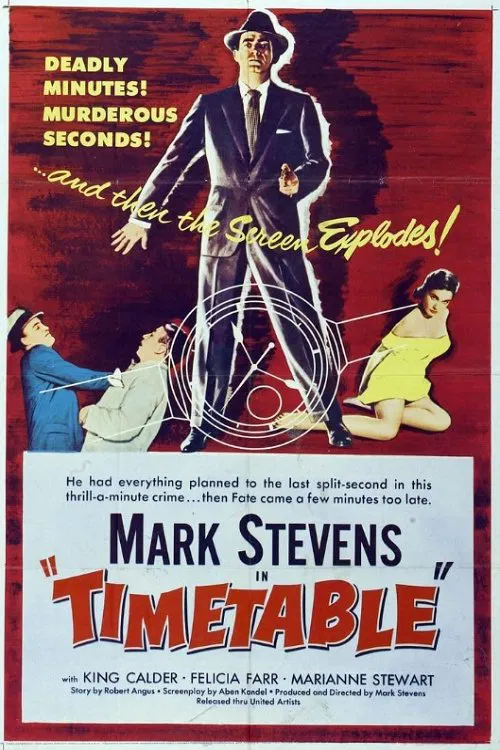
Mark Stevens (December 13, 1916 – September 15, 1994) was a versatile talent of the 1940s and 50s who navigated the worlds of radio, major studio cinema, and the early days of television with a rugged, everyman intensity. Born Richard William Stevens in Cleveland, Ohio, he initially pursued a career in architecture before the allure of performance led him to radio and theater. After moving to Hollywood, he underwent a brief period as “Stephen Richards” before adopting the name Mark Stevens under contract at 20th Century Fox, where he was positioned as a promising leading man who could handle both high-stakes drama and the gritty shadows of the emerging film noir genre.
His breakout came in the mid-1940s, where he established himself as a definitive noir protagonist. He starred as a world-weary private investigator alongside Lucille Ball in the classic thriller The Dark Corner (1946) and delivered a powerful performance as an undercover FBI agent in the semi-documentary crime drama The Street with No Name (1948). During this period, he also showcased his dramatic range in the acclaimed psychological drama The Snake Pit (1948), proving he could hold his own alongside legendary performers like Olivia de Havilland in a complex, high-pressure narrative.
As the entertainment landscape shifted in the 1950s, Stevens became one of the first major film actors to fully embrace the potential of television. He achieved widespread fame as the star and producer of the newspaper drama Big Town, playing the crusading editor Steve Wilson. His work on this series was particularly significant because he took a hands-on role in the production, eventually directing and producing episodes himself. He also became one of the select few actors to step into the iconic role of the title detective in Martin Kane, Private Eye between 1953 and 1954, further cementing his status as a staple of the hard-boiled mystery genre.
Later in his career, Stevens demonstrated a strong independent streak, forming his own production company and directing several feature films, including the noir thrillers Cry Vengeance (1954) and Timetable (1956). His willingness to work behind the camera allowed him to maintain creative control in an industry that was rapidly changing. In his later years, he lived in Europe for a period and continued to make guest appearances on television before passing away in 1994. Today, Mark Stevens is remembered as a quintessential figure of the noir era—a performer whose grit and intelligence helped define the cinematic and televised heroes of the mid-20th century.