
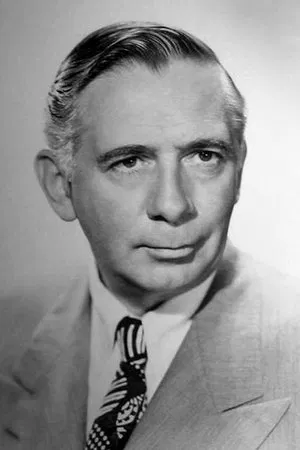
Ray Collins (December 10, 1889 – July 11, 1965) was a cornerstone of 20th-century American performance, moving seamlessly between the high drama of the stage, the atmospheric world of radio, and the golden ages of both film and television. Born in Sacramento, California, Collins was a seasoned veteran of the theater long before he reached Hollywood, reportedly appearing in over 900 stage roles. His deep, resonant voice and commanding presence made him a natural leader in the world of radio drama, which eventually led him to join forces with a young Orson Welles as a founding member of the legendary Mercury Theatre.
When Welles moved to Hollywood to revolutionize cinema, Collins was right by his side. He made one of the most impactful film debuts in history in Citizen Kane (1941), portraying Jim W. Gettys, the calculating political boss who orchestrates the downfall of Charles Foster Kane. His collaboration with Welles became a defining element of the era’s greatest films, as he went on to deliver a nuanced, heartbreaking performance as Jack Amberson in The Magnificent Ambersons (1942) and later appeared in the noir masterpiece Touch of Evil (1958). His ability to project both refined gentility and cold-blooded pragmatism made him one of the most respected character actors in the studio system.
While his filmography includes more than 75 credits, including notable turns in The Best Years of Our Lives (1946) and The Heiress (1949), Collins found his most enduring fame on the small screen. In 1957, he was cast as Lieutenant Arthur Tragg in the iconic legal drama Perry Mason. As the veteran homicide detective who was perpetually outmaneuvered by Raymond Burr’s brilliant defense attorney, Collins became a household name. His portrayal of Tragg—gruff, weary, yet fundamentally decent—provided the perfect comedic and dramatic foil to the show’s courtroom heroics, and he remained with the series for seven seasons despite declining health.
Ray Collins passed away in 1965, leaving behind a legacy as a “performer’s performer” who had mastered every medium he touched. Whether he was sparring with Orson Welles in a smoke-filled room or trying to finally pin a crime on a Perry Mason client, he brought a level of intelligence and gravitas that elevated every production. Today, he is remembered not only as a vital part of the greatest film ever made but as a familiar, beloved presence who helped define the golden age of the television procedural.

