Marianne Stewart (January 16, 1922 – November 1, 1992) was a sophisticated and versatile actress of the stage and screen whose career was marked by a smooth transition from the theatrical traditions of Europe to the golden age of American media. Born Annemarie Schünzel in Berlin, Germany, she was the daughter of the famous German actor and director Reinhold Schünzel. Fleeing the political upheaval of the 1930s, her family relocated to the United States, where she eventually adopted the name Marianne Stewart and began building a reputation as a refined and intelligent performer.
Stewart first established herself as a formidable talent on the Broadway stage. She made her debut in the early 1940s and quickly earned critical acclaim for her role in the 1944 production of The Hasty Heart, a performance that caught the eye of Hollywood talent scouts. Her transition to film began in earnest during the late 1940s and early 50s. She is perhaps best remembered by fans of film noir for her role in the 1952 thriller The Sniper, directed by Edward Dmytryk, where she played a pivotal role in a tense, urban manhunt. Her European background often lent her characters an air of mystery and cultured poise, making her a unique presence in the American studio system.
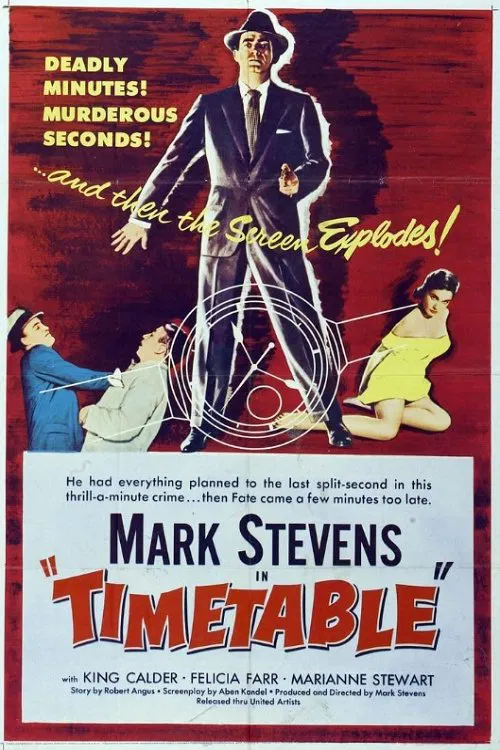
In 1956, Stewart delivered a standout performance in the crime drama Timetable, directed by and starring Mark Stevens. Playing the role of Linda Heldon, she was central to the film’s atmosphere of suspense and moral ambiguity. Working alongside Stevens and King Calder, she proved her ability to navigate the complex, high-stakes narratives of mid-century noir. Throughout this period, she was also a frequent guest on prestigious television anthology series such as The Philco Television Playhouse and Kraft Theatre, as well as episodic dramas like The Perry Mason, where her stage-honed precision was an asset to the fast-paced world of television production.
Beyond her individual acting credits, Marianne Stewart remained a respected member of the theatrical community throughout her life. She was married to the Hungarian-born actor Louis Calhern, a fellow titan of the stage and screen, with whom she shared a deep commitment to the craft of performance. After retiring from the limelight, she lived a private life in California until her passing in 1992. Today, Marianne Stewart is remembered as a bridge between the classic European cinema of her father’s generation and the grit and glamour of 20th-century American film and television.