
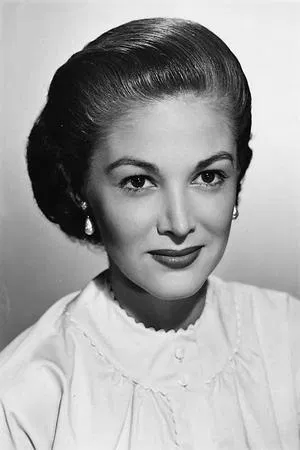
Joan Taylor (August 18, 1929 – March 4, 2012) was born Rose Marie Emma in Geneva, Illinois, into a family where the magic of the movies was a daily reality. Her father, Joseph Emma, had moved from Sicily to Hollywood in the 1920s to work as a prop man before eventually settling in Lake Forest, Illinois, to manage the Deerpath movie theater. Her mother, Amelia Berky, was an Austrian-born vaudeville star whose talents in singing and dancing provided Taylor with an early education in the performing arts. Growing up in a theater environment and raised by performers, Taylor developed a natural screen presence that would eventually lead her back to Hollywood and into some of the most iconic roles of the 1950s.
After honing her craft at the renowned Pasadena Playhouse, Taylor secured a contract with Paramount Pictures, where she began a prolific career that bridged the gap between cinematic spectacle and television drama. She is immortalized in film history for her starring roles in two of the most significant science fiction classics of the mid-century. In Earth vs. the Flying Saucers (1956), she played the resilient Carol Marvin, and a year later, she starred in 20 Million Miles to Earth (1957). In both films, she shared the screen with the legendary stop-motion creations of Ray Harryhausen, providing a grounded, intelligent human element that helped make the fantastic premises feel visceral and real to audiences.
As the industry shifted toward television in the late 1950s, Taylor found a new level of fame on the small screen. She is most warmly remembered by television fans as Milly Scott, the independent and sharp-witted owner of the general store in the classic Western series The Rifleman. Appearing opposite Chuck Connors, she brought a sense of sophisticated charm and grit to North Fork, serving as a rare example of a self-sufficient female character in a genre often dominated by men. Her ability to transition from the high-concept world of science fiction to the grounded realism of the frontier demonstrated a professional range that kept her in high demand throughout the Golden Age of television.
In her later years, Taylor transitioned from acting to writing, often using the name Rose Freeman. She contributed to the development of various television projects and scripts, including work related to the long-running series Hawaii Five-O, which was created by her husband, Leonard Freeman. Her career reflected a lifelong commitment to the entertainment industry, evolving from a child of the theater to a leading lady and finally a creative voice behind the scenes. She passed away in 2012 at the age of 82, leaving behind a legacy as an actress who could command the screen with equal parts beauty, brains, and a quiet, formidable strength.

