
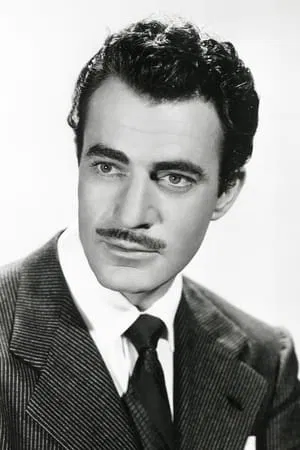
Gilbert Roland (December 11, 1905 – May 15, 1994) was a dashing and resilient figure whose career spanned a remarkable seven decades, evolving from a “Latin Lover” of the silent era into one of Hollywood’s most respected character actors. Born Luis Antonio Dámaso de Alonso in Ciudad Juárez, Mexico, his family fled to the United States during the Mexican Revolution after Pancho Villa took control of their town. At just 14 years old, driven by a dream of the silver screen, he hopped a freight train to Hollywood. He created his stage name by honoring two of his idols—John Gilbert and Ruth Roland—setting the stage for a legacy that would eventually earn him a star on the Hollywood Walk of Fame.
Roland’s early years were defined by his striking looks and romantic magnetism. After signing with Paramount, he shot to stardom alongside Clara Bow in The Plastic Age (1925) and played the iconic role of Armand in Camille (1926) opposite Norma Talmadge. While many silent stars faltered with the advent of “talkies,” Roland’s deep, resonant voice allowed him to thrive. He became a staple of Spanish-language adaptations of American films, ensuring his popularity crossed both linguistic and international borders. During World War II, he paused his skyrocketing career to serve his adopted country in the United States Army Air Corps.
The 1940s and 50s marked a creative renaissance for Roland, as he moved away from stereotypical roles to showcase his dramatic depth. He became the face of the heroic Cisco Kid in a popular series of films and earned critical acclaim for his work in major productions like John Huston’s We Were Strangers (1949). In 1953, he delivered a memorable performance as the Greek-American sponge diver Mike Petrakis in the Technicolor epic Beneath the 12-Mile Reef, starring alongside Terry Moore and Robert Wagner. His talent was officially recognized with two Golden Globe nominations, first for The Bad and the Beautiful (1952) and later for John Ford’s Cheyenne Autumn (1964).
Off-screen, Roland was known for his elegance and high-profile romances, including marriages to actress Constance Bennett and later to Guillermina Cantú, which lasted until his death. He continued to work well into his later years, making his final film appearance in the 1982 western Barbarosa. When he passed away from cancer at the age of 88, he left behind a body of work that stood as a testament to his grit and adaptability. From a teenage stowaway on a freight train to a pillar of the Hollywood establishment, Gilbert Roland remained the quintessential “gentleman of the cinema,” representing a bridge between the founding days of film and the modern era.

